Success Stories
CERNs Daten des „Large Hadron Collider“ werden auf Infortrends Storage-Systemen gesichert
Organisation
CERN, ist die Europäische Organisation für Kernforschung, mit dem weltweit größten Labor für die Teilchenphysikforschung.
Herausforderung
Es werden 400TB Speicherplatz für die Sicherung wertvoller Metadaten die Forschungsdaten organisieren benötigt.
Lösung
EonStor® Storage System mit:
- Hoher Zuverlässigkeit
- Ausgezeichnetem Preis / Leistungs - Verhältnis
- Umfassender technischer Unterstützung
- Einer breiten Palette an Baugrößen und Technologien
- Benutzerfreundlichkeit
CERNs Daten des „Large Hadron Collider“ werden auf Infortrends Storage-Systemen gesichert
Eine Herausforderung an die Speicherkapazität
Der Large Hadron Collider (LHC) ist das komplexeste wissenschaftliche Instrument der Welt und wurde entwickelt, um grundlegende Fragen über das Universum zu beantworten, etwa was der Ursprung der Masse ist.
Der LHC ist ein Teilchenbeschleuniger, der aus einem 27 km langen Ring von Supermagneten besteht. Die Protonenteilchen zirkulieren in separaten Röhren, in einem Vakuum zehnmal niedriger als auf dem Mond. Tausende Magneten, verschiedener Arten und Größen leiten die Teilchen durch den Beschleuniger. Kurz vor dem Zusammenstoß wird ein weiterer Magnettyp verwendet, um die Teilchen einander näher zu bringen, um somit die Wahrscheinlichkeit von Zusammenstößen zu erhöhen.
Diese Kollisionen erzeugen Temperaturen, die für einen Augenblick mehr als 100.000 Milliarden Mal heißer sind als die Temperatur im Herzen der Sonne. Die sechs auf dem LHC installierten Experimente registrieren die Fragmente der Kollisionen. Diese Experimente erzeugen um die 15 Petabyte (15.000 Terabytes) unbezahlbare, wissenschaftliche Daten pro Jahr, eine bedeutende Herausforderung an die Speicherkapazität.
Um diese Daten zu sichern und zu organisieren bedarf es einer dedizierten und anspruchsvollen Infrastruktur, die mehrere hundert Terabyte höchst zuverlässigen Speicherplatz erfordert.
Eine Frage der Infrastruktur
Bei der Planung und Inbetriebnahme der Speicherinfrastruktur für das LHC hat die IT-Abteilung des CERN darauf geachtet, dass das Forschungsteam mit den bestmöglichen Systemen ausgestattet wird, während es einen straffen Terminplan und ein knapp bemessenes Budget einhalten musste. Nach einer detaillierten Bewertung des Metadaten-Speichers, entschied sich CERN für Infortrends Storage-Systeme, die eine optimale Balance zwischen Kosten, Zuverlässigkeit und technischen Features bieten. Die freie Wahl der Laufwerke und die breite Auswahl an Laufwerkschächten ermöglichten eine flexible Implementierung. Für das LHC wurden verschiedene Storage-Systeme ausgewählt, einschließlich 8, 12, 16 und 24-fach, FC zu SATA sowie FC zu SAS / SATA Storage-Systeme.
Scheinbar kleine Ausstattungsmerkmale wurden als Arbeitserleichterung wahrgenommen. Vor der Einführung der zentralen Verwaltung stellte das CERN-Team zum Beispiel fest, dass ein Front-Panel-Display besonders wichtig ist. Ein weiterer wichtiger Faktor sich für Infortrends Storage-Systeme zu entscheiden, war auch die umfassende technische Unterstützung durch das technische Team von Infortrend während der zahlreichen LHC-Projekte.
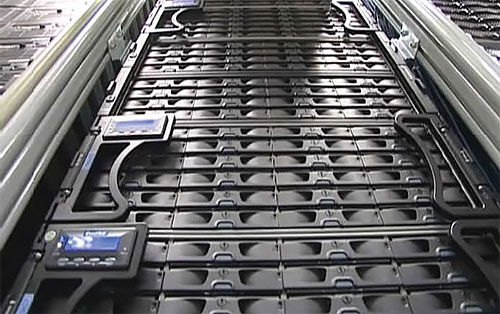
CERNs Datenspeicherinfrastruktur basiert vorwiegend auf einer NAS ähnlichen Struktur: Viele Anwendungen sind auf Linux Servern, jeweils mit 5 bis 14 TB pro Server und mit einer Gesamtkapazität von mehr als 7.000 TB installiert. Für anspruchsvollere Anwendungen, insbesondere für die Metadaten, die den Inhalt der Massenspeichersysteme beschreiben, verwendet CERN jedoch Datenbanken, die als Oracle Real-Application-Cluster implementiert sind. Fünf Instanzen bestehen jeweils aus 30 Servern, ohne lokalen Speicher und 30 Storage-Systemen, die über ein redundantes Fibre-Channel Netzwerk verbunden sind. Darüber hinaus werden Tape-Librarys und weitere Storage-Systeme für die Datensicherung, Archivierung und Langzeitdaten-speicherung eingesetzt.
Wie Sie es von einem wissenschaftlich bedeutsamen und hochkarätigen Projekt erwarten, bestand das CERN-IT-Team auf der Erfüllung sehr strenger Kriterien.
Über CERN
CERN, die Europäische Organisation für Kernforschung ist eines der weltweit größten und angesehensten Zentren für die wissenschaftliche Forschung.
Am CERN werden die weltweit größten und komplexesten wissenschaftlichen Instrumente verwendet, um die Grundbe-standteile der Materie zu unter-suchen. Das 1954 gegründete CERN-Laboratorium liegt auf der französisch-schweizerischen Grenze bei Genf. Es ist eines der ersten Joint Ventures Europas und hat mittlerweile 20 Mitgliedstaaten.